
 SkyCare
  Medical Advice
DVT When Flying

DVT When Flying: Signs, Symptoms, Prevention and When to Get Medical Help
Worried about DVT when flying? Deep vein thrombosis, often shortened to DVT, is a blood clot in a deep vein, usually in the leg. It can happen for many reasons, but long periods of sitting still during flights, car journeys or train travel can increase the risk.
For most healthy travellers, the risk of a blood clot after flying is low. However, knowing the signs of DVT, what to do before and after your flight, and when to seek urgent medical help can make a real difference — especially if you are travelling long haul, recently had surgery, are pregnant, have cancer, take oestrogen-containing contraception, or have had DVT before.
Whether you’re heading off on a family holiday, travelling for business or visiting friends overseas, this guide explains what you need to know before you fly, what to look out for after you land and when to seek medical help if symptoms develop.
Important: when to get urgent help
Seek urgent medical advice if you think you may have DVT. If you have leg pain or swelling and also feel short of breath or have chest pain, call emergency services immediately or go to A&E. A blood clot can travel to the lungs and cause a pulmonary embolism, which can be life-threatening.
Quick Navigation
- What is DVT?
- Why can flying increase the risk of DVT?
- Who is most at risk of DVT when flying?
- Before you fly: how to reduce your risk
- During the flight: simple DVT prevention tips
- After landing: symptoms to watch for
- Signs and symptoms of DVT
- Pulmonary embolism symptoms: emergency warning signs
- Do I have DVT?
- How is DVT diagnosed?
- How is DVT treated?
- What to do if DVT symptoms happen abroad
- Can you fly home with DVT?
- DVT and flying FAQs
What is DVT?
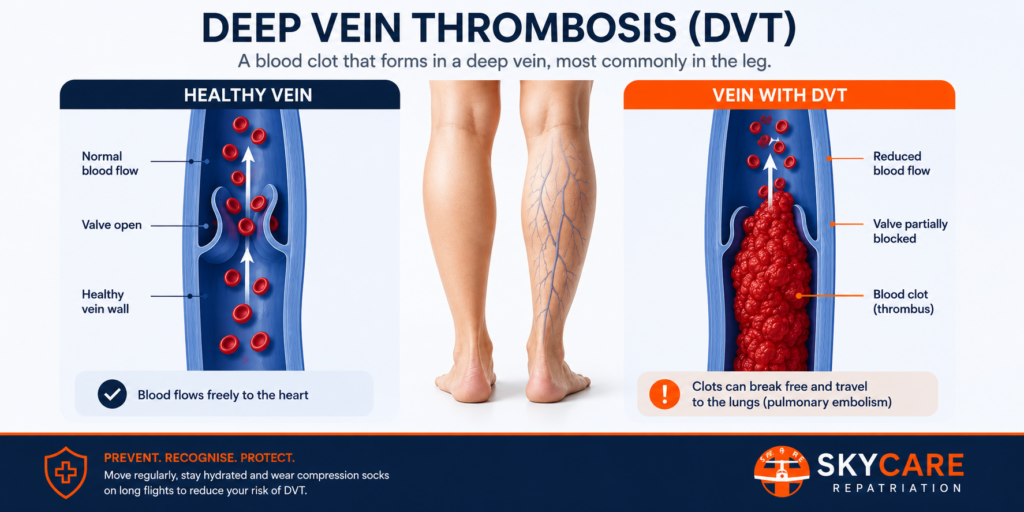
DVT stands for deep vein thrombosis. It means a blood clot has formed in a deep vein. DVT most commonly affects the leg, particularly the calf or thigh, although it can occasionally occur elsewhere in the body.
A clot can partly or completely block the normal flow of blood through the vein. This causes pressure to build up behind the clot, leading to symptoms such as pain, swelling and warmth in the affected leg.
If you’ve found this page because you’re worried about calf pain, a swollen leg or a possible blood clot after flying, you’re certainly not alone. Online information can help you understand the symptoms, but it cannot diagnose a blood clot. You cannot reliably confirm or rule out DVT by looking at your leg, searching on Google, asking ChatGPT or using any online symptom checker. If you think you may have DVT, you should be assessed promptly by a medical professional.
Why can flying increase the risk of DVT?
Flying itself is not the only issue. The main problem is immobility. On a long-haul flight, whether you’re travelling to destinations such as the United States, Thailand, Australia or other parts of Asia, your legs can remain bent and still for many hours. When your calf muscles aren’t moving regularly, blood flow through the legs slows down, which can increase the risk of DVT in some travellers.
The risk of DVT is generally associated with journeys lasting more than four hours, whether you’re flying across Europe or travelling long haul. The same risk can also occur during lengthy car, coach or train journeys where you’re sitting for extended periods. That doesn’t mean every long-haul flight results in a blood clot—far from it. Most travellers complete long journeys without any problems at all.
Although the overall risk remains low for most healthy travellers, prolonged sitting combined with other risk factors can increase the chance of developing a blood clot.
The good news is that millions of people take long-haul flights every year without developing DVT. Understanding the risks isn’t about putting you off travelling—it’s about helping you recognise when something isn’t quite right.
Who is most at risk of DVT when flying?
Anyone can develop DVT, but some travellers are at higher risk than others. Your risk may be increased if you:
- have had DVT or pulmonary embolism before
- are over 60
- have recently had surgery, especially hip, knee, abdominal or cancer surgery
- have recently been in hospital or confined to bed
- are pregnant or have recently had a baby
- take hormone replacement therapy or contraception containing oestrogen
- have cancer, heart failure or inflammatory conditions
- have thrombophilia or a family history of blood clots
- are overweight or living with obesity
- smoke
- are dehydrated
- have reduced mobility, paralysis or a recent lower limb injury
- have varicose veins
If you are high risk and planning a long flight, speak to your GP, consultant or travel clinic before you travel. Do not start aspirin, anticoagulants or compression stockings for DVT prevention without appropriate medical advice, especially if you have other health conditions or take regular medication.
Before you fly: how to reduce your risk
Most travellers already know the basics: drink water, move around and avoid sitting still for hours. The trick is actually remembering to do it once you’re wedged into seat 42B between a snorer and someone treating the armrest like inherited land.
Before your flight, you can reduce your risk by planning ahead:
- Choose practical clothing. Wear loose, comfortable clothes that do not restrict blood flow around your waist, thighs or calves.
- Hydrate well. Dehydration can increase the chance of DVT, so drink water before and during travel.
- Limit alcohol. Alcohol can contribute to dehydration and may make you less likely to move during the flight.
- Plan movement. Choose an aisle seat if possible, especially if you are higher risk or on a long haul flight.
- Ask about compression stockings. Graduated compression stockings may be helpful for some travellers, but they need to fit correctly and are not suitable for everyone.
- Get medical advice if high risk. If you have had DVT before, recent surgery, cancer treatment, pregnancy or a known clotting disorder, ask a clinician what precautions are appropriate.
Many travellers wonder whether compression stockings, drinking more water or medication can help prevent DVT during a flight. For most people, staying well hydrated, moving regularly and exercising your legs are sensible precautions. Well-fitted graduated compression stockings can also help reduce the risk of DVT and may reduce leg swelling during long journeys, particularly for people with additional risk factors. If you have a medical condition affecting your circulation, or you’re unsure which type of compression stocking is appropriate, ask a healthcare professional for advice before travelling.
During the flight: simple DVT prevention tips
During the flight, your aim is to keep blood moving through your legs. You do not need to perform a full gym session in the aisle. Small, regular movements are better than sitting still for six hours and then doing one heroic lap past the toilets.
- Take every sensible opportunity to get up and walk around the cabin when it’s safe to do so.
- Flex your ankles and point your toes while seated to keep your calf muscles working.
- Rotate your feet in gentle circles every so often.
- Avoid sitting with your legs crossed for long periods.
- Keep a bottle of water handy and sip it regularly throughout the flight rather than waiting until you feel thirsty.
- Alcohol is best enjoyed in moderation – too much can contribute to dehydration and make it easier to sleep through opportunities to move.
- If you do fall asleep, try to stretch and walk around once you wake up rather than staying in the same position for hours.
If you are wearing prescribed or recommended compression stockings, make sure they are properly fitted and worn as instructed. Tight ordinary socks or stockings that dig into the skin are not the same thing and may be unhelpful.
After landing: symptoms to watch for
DVT symptoms don’t always appear during a flight. Some people notice them after landing, later that day, or even several days after returning home. An aching calf after a long journey isn’t automatically a blood clot — it could simply be tired muscles after carrying luggage, walking around a new city or spending hours exploring on holiday. However, if the pain is accompanied by swelling, warmth, tenderness or changes in skin colour, it should never be ignored and should be assessed by a medical professional.
Once you’ve landed, don’t make a beeline for the hotel sunbed just yet. A short walk through the airport, collecting your luggage and keeping hydrated all help get your circulation moving again. If you notice one-sided leg pain, swelling, warmth or changes in skin colour over the following hours or days, don’t dismiss it as “just travel stiffness”—seek medical advice promptly.
It’s worth remembering that mild swelling around both ankles is quite common after sitting for long periods and doesn’t necessarily mean you have DVT. A blood clot is more likely to cause symptoms in one leg, particularly the calf or thigh, especially when swelling is accompanied by pain, warmth or changes in skin colour.
Signs and symptoms of DVT
The signs and symptoms of DVT can include:
- Throbbing or cramping pain in one leg, often in the calf or thigh.
- Swelling in one leg.
- Warm skin around the painful area.
- Red, blue or darkened skin, which may be harder to notice on brown or black skin.
- Swollen or more visible veins.
- Tenderness when standing, walking or touching the affected area.
Most people don’t immediately think “I might have DVT”. They often assume they’ve pulled a muscle, overdone the sightseeing, or simply have tired legs after a long flight. While that is often the case, one-sided leg pain combined with swelling, warmth or changes in skin colour should never be ignored. It’s always safer to have these symptoms assessed by a medical professional.
DVT can occasionally affect both legs or even an arm, but it most commonly develops in one leg. If you’re worried that your symptoms could be a blood clot, don’t try to diagnose yourself at home or hope they’ll disappear after a night’s sleep. Prompt medical assessment is the safest course of action.
One final myth worth clearing up: don’t massage a painful, swollen calf if you think it could be DVT. Although many people instinctively reach for a massage when a muscle aches, a suspected blood clot needs urgent medical assessment instead. And don’t let the thought of interrupting your holiday or business trip put you off seeking help. Missing a DVT is far more disruptive than getting it checked.
Pulmonary embolism symptoms: emergency warning signs
A pulmonary embolism can happen if part of a blood clot travels to the lungs. This is a medical emergency.
🚨 Call emergency services immediately if you have:
- Sudden shortness of breath
- Chest pain
- Coughing up blood
- Fainting, collapse or feeling severely unwell
- Symptoms of DVT together with breathlessness or chest pain
Emergency ambulance numbers around the world (Click to expand)
If you are overseas, call the local emergency medical services immediately.
- 🇬🇧 United Kingdom: 999 or 112
- 🇪🇺 Europe: 112
- 🇺🇸 USA: 911
- 🇨🇦 Canada: 911
- 🇲🇽 Mexico: 911
- 🇦🇺 Australia: 000
- 🇳🇿 New Zealand: 111
- 🇦🇪 UAE: 998
- 🇶🇦 Qatar: 999
- 🇸🇦 Saudi Arabia: 997
- 🇹🇷 Turkey: 112
- 🇪🇬 Egypt: 123
- 🇹🇭 Thailand: 1669
- 🇯🇵 Japan: 119
- 🇸🇬 Singapore: 995
- 🇮🇳 India: 112
- 🇭🇰 Hong Kong: 999
- 🇿🇦 South Africa: 112 or 10177
- 🇧🇷 Brazil: 192
Travelling tip: Save your destination’s emergency number in your phone before you travel. If you’re seriously unwell abroad, call the local emergency services first, then contact your travel insurer when it is safe to do so.
Do I have DVT?
You cannot confirm DVT from symptoms alone. Other problems can cause leg pain or swelling, including muscle strain, injury, infection, fluid retention or varicose vein problems. However, because DVT can be serious, it should not be guessed at or left to “see how it goes” when symptoms are concerning.
You should seek urgent medical advice if:
- one leg becomes swollen, painful, warm or discoloured
- calf pain develops after a flight or long journey
- you have DVT symptoms and recently had surgery or hospital treatment
- you have had DVT or pulmonary embolism before
- you are pregnant or recently gave birth
- you have cancer or are receiving cancer treatment
- you develop chest pain or breathlessness
In the UK, the NHS advises seeking urgent help if you think you have DVT. If symptoms suggest pulmonary embolism, this becomes an emergency.
How is DVT diagnosed?
If a doctor suspects DVT, you may be referred for tests. These can include a clinical assessment, a blood test called a D-dimer, and an ultrasound scan to check blood flow in the vein.
Doctors may also use something called the Wells score to estimate how likely it is that you have DVT before deciding which tests are needed. If DVT is suspected, you should be assessed promptly. Depending on the assessment, you may be referred for an ultrasound scan, often within 24 hours if DVT is considered likely.
This is why it is important not to rely on online symptom checkers alone. Online information can help you understand the warning signs, but it can’t examine your leg, arrange an ultrasound scan or diagnose a blood clot. That’s why medical assessment is so important if DVT is suspected.
How is DVT treated?
DVT is usually treated with anticoagulant medicine, often called blood thinners. These medicines reduce the risk of the clot getting bigger and help prevent further clots. Treatment commonly lasts for at least three months, although the exact length depends on the cause of the clot, your medical history and your doctor’s advice.
If you develop DVT during pregnancy, treatment may involve blood-thinning injections during pregnancy and for a period after birth. Your maternity team or specialist doctor will advise you.
Once treatment has started, you may be encouraged to stay active and walk regularly if you can. You may also be advised to elevate the affected leg when sitting. Always follow the advice given by your treating clinician.
What to do if DVT symptoms happen abroad
In more serious cases, a traveller may need hospital treatment abroad and may not be fit to return home on a normal commercial airline immediately. Some patients are well enough to travel with a commercial medical escort, while others may require stretcher transport on a scheduled flight or, in more serious situations, a dedicated air ambulance. The most appropriate option depends on your medical condition, fitness to fly and the advice of your treating doctor.
SkyCare Repatriation works with patients, families, insurers, hospitals and embassies to arrange safe medical repatriation when returning home on a standard flight is no longer possible.
Can you fly home with DVT?
You should not fly with a suspected or confirmed DVT unless you have been assessed and cleared by a medical professional. The NHS advises delaying flights or long journeys until at least two weeks after starting blood-thinning medicine.
Patient.info also advises that people diagnosed with DVT should seek specialist advice about when they can fly and should continue to follow general prevention advice and anticoagulation treatment.
Airlines may require medical clearance, a MEDIF form or fit-to-fly documentation, particularly if you have recently been hospitalised, need oxygen, have reduced mobility, or require assistance during the flight.
If you are unsure whether you are safe to fly, speak to your treating doctor and airline before travelling. If you are already abroad and your condition is complex, a medical repatriation provider can help coordinate clinical information, airline requirements and safe transport options.
Key takeaways
- DVT is a blood clot in a deep vein, usually in the leg.
- Long flights can increase risk because of prolonged sitting and reduced leg movement.
- One-sided calf pain, swelling, warmth or skin colour change should be checked urgently.
- Breathlessness or chest pain with DVT symptoms is an emergency.
- Move regularly, drink water, avoid excess alcohol and ask for medical advice if you are high risk.
- Do not travel by air with suspected or confirmed DVT unless your treating doctor confirms it is safe to do so.
- If DVT happens abroad, seek medical care locally and contact your travel insurer.
Can DVT be prevented completely?
Unfortunately, no. There is no way to eliminate the risk of DVT completely. However, for most people the risk remains very low, and simple measures such as staying hydrated, moving regularly during long journeys and understanding your personal risk factors can reduce the likelihood even further.
The most important message is not to be frightened of flying. Millions of people travel safely every day without developing DVT. Knowing the warning signs simply means you’ll recognise when something isn’t right and know when to seek medical advice.
This article has been clinically reviewed by Dr Lee Collier and is based on current NHS guidance relating to Deep Vein Thrombosis (DVT). – SkyCare Repatriation on 30/06/2026 | next review due 30/06/2028 | published on 30/06/2026
DVT and flying FAQs
Flying can increase the risk of DVT because passengers may sit still for long periods. The risk is higher on journeys over four hours and in people with additional risk factors.
DVT symptoms may appear during travel, shortly after landing, or in the days following a long journey. Seek medical advice if you develop one-sided leg pain, swelling, warmth or colour change after flying.
DVT pain is often described as throbbing, cramping or tenderness in the calf or thigh. It may be worse when standing or walking, but symptoms vary.
No. Calf pain can be caused by muscle strain, cramp or other problems. However, calf pain after flying should be taken seriously if it is one-sided, persistent, swollen, warm or associated with redness or skin colour change.
Mild swelling in both ankles can happen after sitting for a long time. One-sided swelling, especially with pain or warmth, may be a sign of DVT and should be checked urgently.
DVT is more strongly associated with journeys over four hours, but risk depends on the individual. Someone with major risk factors may still need advice before shorter flights.
Graduated compression stockings may help some travellers, particularly those at increased risk, but they must fit correctly. Ask a healthcare professional if they are suitable for you.
Do not take aspirin for DVT prevention unless a doctor has advised it. It is not suitable for everyone and can cause side effects or interact with other medicines.
Yes. Dehydration is listed as a factor that can increase the chance of DVT. Drink water regularly and avoid excessive alcohol during travel.
You may be able to fly, but you should ask your doctor for individual advice, especially before long haul travel. You may need specific precautions.
Many people travel while taking anticoagulants, but you should follow your doctor’s advice and carry medication safely. Do not stop blood thinners for travel unless instructed by a clinician.
DVT needs medical assessment and often anticoagulant treatment. Do not ignore suspected DVT or wait for it to disappear.
No. If you are worried about DVT, do not massage the affected area. Seek medical advice urgently.
Seek local medical help, contact your travel insurer, keep all medical documents, and do not fly home until a doctor confirms it is safe.
DVT symptoms with chest pain, shortness of breath, coughing blood, fainting or collapse may suggest pulmonary embolism. Call emergency services immediately.
If illness or injury abroad prevents you from travelling on a normal flight, our experienced medical team is here to help.
Need Help Getting Home Safely?
When illness or injury abroad prevents you from travelling home safely, SkyCare Repatriation is here to help.
From commercial medical escorts and stretcher transfers to dedicated air ambulances, we’ll recommend the safest and most appropriate transport for your medical needs.
Need advice or a quotation? Contact our team 24 hours a day or request a free medical repatriation quotation online.
Contact Us