
 SkyCare
  Air Repatriation
What is an Air Ambulance?
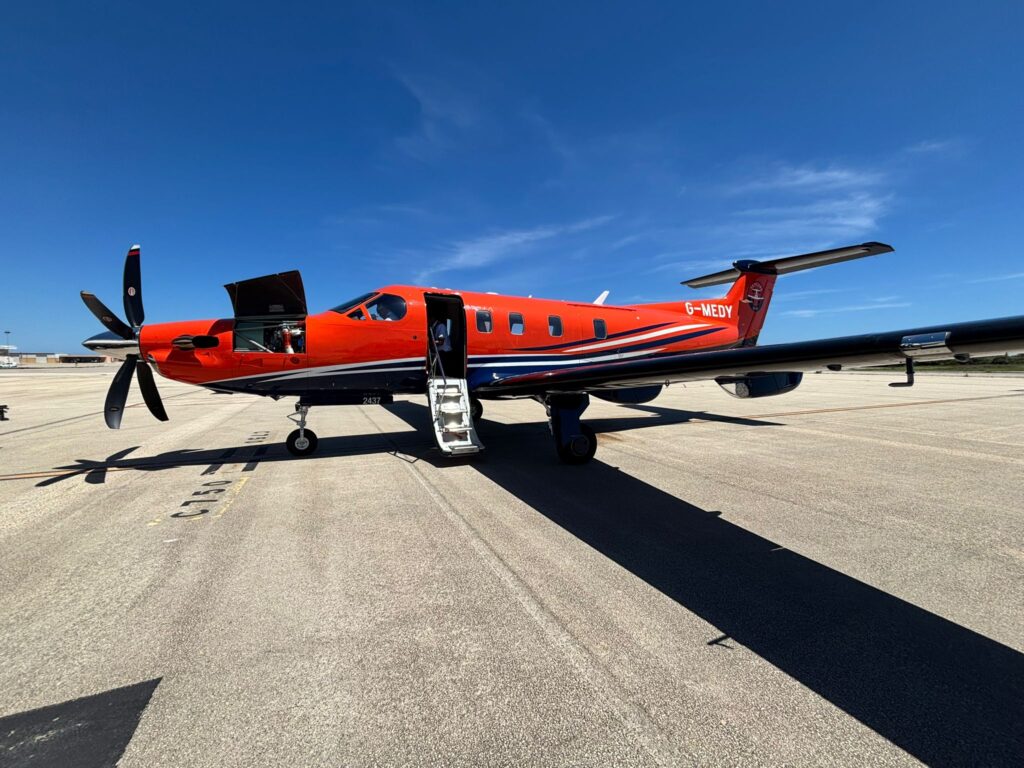
An air ambulance is a specially equipped aircraft used to transport patients who need medical care during a flight. Fixed-wing air ambulances – usually jets or turboprops – can carry monitoring, oxygen, medication, ventilatory support and other medical equipment, allowing patients to travel safely over distances that would be impractical by road. They are commonly used for international medical repatriation, urgent inter-hospital transfers and patients who are not suitable for ordinary commercial travel.
SkyCare Repatriation provides international air ambulance transfers for patients whose medical condition requires dedicated aircraft transport. SkyCare doctors, nurses and paramedics provide the patient’s clinical care during the repatriation, while our operations team manages the aviation, hospital and ground-transport logistics around the journey.
When Is an Air Ambulance Needed?
An air ambulance may be appropriate when a patient needs a level of medical support, monitoring, space or urgency that cannot safely be provided on a normal commercial flight. The decision depends on the patient’s current condition, treatment needs, mobility, oxygen requirements, route and the risks associated with travel.
- Long-distance medical transfer: Fixed-wing air ambulances can move patients rapidly between countries or continents when road transport is unsuitable.
- Access to specialist treatment: A patient may need transfer to a hospital with specialist expertise or facilities that are not available locally.
- Higher levels of in-flight care: Depending on the case, the aircraft can carry equipment for advanced monitoring, oxygen therapy, medication delivery and critical-care support.
Typical Air Ambulance Missions
- Medical repatriation after serious illness or injury abroad
- Transfers following skiing or alpine accidents
- Inter-hospital transfers for specialist or intensive treatment
- Patient repatriation for continued treatment closer to home
- Transfers for patients whose oxygen, monitoring or mobility needs make commercial travel unsuitable

How Much Does an Air Ambulance Cost?
As an indicative guide, air ambulance flights within Europe typically range from £8,000 to £40,000. Longer intercontinental air ambulance transfers can range from approximately £40,000 to £180,000, depending on the mission.
These are broad indicative ranges rather than fixed quotations. The final cost depends on factors such as the route, aircraft required, patient condition, medical crew, equipment, airport access, ground ambulance transfers and how quickly the mission needs to be arranged. For a more detailed explanation, see our medical repatriation cost guide.
How Fast and How High Does an Air Ambulance Fly?
- Speed: Fixed-wing air ambulances typically cruise between 300 and 400 mph (480–640 km/h).
- Altitude: Air ambulance flights can cruise at around 30,000–40,000 feet, although the flight profile may be adjusted when medically necessary.
These figures are indicative rather than fixed. Actual speed and cruising altitude depend on the aircraft, route, weather and clinical requirements. Dedicated medical aircraft are selected around the mission rather than using one fixed aircraft type for every patient.
In some cases, the medical team may request changes to the flight profile because cabin pressure, oxygen requirements or the patient’s condition make a standard operating profile less suitable. These decisions are made case by case with the flight crew and clinical team.
Who Provides the Medical Care During an Air Ambulance Flight?
During a SkyCare air ambulance repatriation, the patient is cared for by the SkyCare clinical team. The team may include a doctor, nurse or paramedic depending on the patient’s condition and the level of medical support required. They manage monitoring, medication, oxygen, pain relief and other clinical needs throughout the journey.
The medical team is selected around the patient rather than applying the same staffing model to every flight. More complex cases may require additional clinicians or specialist equipment, while other patients may need a different form of medical transport altogether.
Air Ambulance or Commercial Medical Escort?
Not every patient who needs medical support has to travel by dedicated air ambulance. If the patient is clinically stable and suitable for commercial travel, a commercial flight with a medical escort may sometimes be appropriate. Patients who require more intensive monitoring, greater space, specialist equipment or a higher level of medical intervention may need a dedicated air ambulance instead.
SkyCare’s clinical team reviews the medical information before recommending the most appropriate transport option.
What Happens During a Bed-to-Bed Air Ambulance Transfer?
- Medical review: the clinical team assesses the patient’s condition and travel requirements.
- Mission planning: the operations team coordinates the aircraft, hospitals, airports and ground ambulance transport required around the flight.
- Patient collection and flight: the SkyCare medical team accompanies the patient and provides care during transport.
- Clinical handover: after arrival, the patient is transferred safely to the receiving hospital, care facility or home.
This bed-to-bed approach keeps clinical responsibility and transport planning connected throughout the repatriation rather than treating the flight as an isolated part of the journey.
Frequently Asked Questions
Travel insurance cover varies by policy and insurer. Some policies include medically necessary repatriation, but approval, exclusions and the transport method covered can differ. Families should contact the insurer or assistance company as early as possible and check the policy terms before assuming an air ambulance will be funded.
A commercial medical escort is a SkyCare doctor, nurse or paramedic who accompanies a clinically suitable patient on a scheduled airline. A dedicated air ambulance uses a medical aircraft when the patient needs more space, monitoring, equipment or in-flight medical support than commercial travel can safely provide.
Timing depends on the patient’s medical readiness, aircraft availability, route, airport permissions, ground transport and the hospitals involved. Urgent transfers can sometimes be arranged quickly, but every mission is planned around what is clinically safe and operationally achievable for that patient.
Medical care from collection to clinical handover
Need to discuss an air ambulance transfer?
If someone you care for needs medical repatriation, SkyCare can review the patient’s condition and help determine whether a dedicated air ambulance, commercial medical escort or another transport option is medically appropriate.
- SkyCare doctors, nurses and paramedics providing patient care during repatriation
- CQC-regulated UK medical services
- Dedicated air ambulance and commercial medical escort options
- Bed-to-bed transfer planning with hospital liaison and clinical handover
- 24/7 operational support for international patient transfers
