
 SkyCare
  Travel Advice
Can You Fly with COPD?
Yes, many people with Chronic Obstructive Pulmonary Disease (COPD) can fly safely and enjoy holidays both in the UK and abroad. However, flying with COPD requires careful planning, particularly if you have severe symptoms, low oxygen levels or have recently experienced a flare-up. Before travelling, it’s important to understand how cabin pressure affects your breathing, whether you may need supplemental oxygen during your flight and when a fit-to-fly assessment may be recommended.
Whether you’re planning a relaxing holiday in Spain, visiting family overseas or returning home after receiving medical treatment abroad, the right preparation can make travelling with COPD much safer and more comfortable. Most airlines welcome passengers with respiratory conditions, although some require advance medical clearance or notification if oxygen is needed during the journey.
In this guide, we’ll explain everything you need to know about flying with COPD, including when it’s safe to travel, when you may need an airline-approved portable oxygen concentrator (POC), what the NHS recommends before flying and when specialist medical transport may be the safest option.
At SkyCare, we regularly assist passengers with COPD by arranging portable oxygen concentrator hire, medical escorts and, where commercial flying isn’t suitable, specialist air ambulance repatriation. Our aim is always to help patients travel as safely and comfortably as possible, whether that’s on a scheduled airline or via dedicated medical transport.
Can People with COPD Fly?
For most people, the answer is yes. Having COPD does not automatically mean you cannot fly. In fact, thousands of people with mild or moderate COPD travel safely every year. The key is ensuring your condition is stable before departure and understanding how flying may affect your breathing.
Commercial aircraft cabins are pressurised, but not to sea level. During flight, cabin pressure is typically equivalent to being around 6,000 to 8,000 feet (1,800 to 2,400 metres) above sea level. At this altitude, there is less oxygen available in the air than you would normally breathe on the ground. For healthy passengers, this reduction is rarely noticeable. However, for people living with COPD, it can make breathing more difficult and may reduce oxygen levels in the blood.
People with COPD should discuss their travel plans with their healthcare professional if they are concerned about flying, have severe symptoms or think they may require oxygen during the flight. In some cases, your respiratory specialist may recommend a hypoxic challenge test (also known as a fit-to-fly assessment) to determine whether additional oxygen will be needed while travelling.
The good news is that careful planning allows many people with COPD to continue travelling for holidays, cruises, business trips and family visits. Understanding your own condition, following your clinician’s advice and preparing well before departure can significantly reduce the risk of problems during your journey.
Why Does Flying Affect People with COPD?
Commercial aircraft are designed to fly at high altitudes, often between 30,000 and 40,000 feet. Although the cabin is pressurised to make flying safe and comfortable, it is not pressurised to sea level. Instead, the cabin environment is usually equivalent to an altitude of around 6,000 to 8,000 feet (1,800 to 2,400 metres).
At this altitude, the amount of oxygen available in the air is lower than at ground level. Healthy lungs can usually compensate without difficulty, but people living with COPD may already have reduced lung function or lower oxygen levels. As a result, some passengers may experience increased breathlessness, tiredness or reduced oxygen saturation during a flight.
The effect varies from person to person. Someone with mild, well-controlled COPD may notice very little difference, while another person with more advanced disease could require supplemental oxygen throughout their journey. This is why it’s important not to compare your condition with someone else’s and instead seek advice based on your own health.
If you already use oxygen at home, have recently been admitted to hospital, or become breathless after walking only short distances, your healthcare team may recommend further assessment before you travel.
How Cabin Pressure Affects Your Oxygen Levels
One of the biggest challenges for people with COPD is maintaining adequate oxygen levels during flight. Even if your oxygen saturation is normal at home, it may fall once the aircraft reaches cruising altitude.
For this reason, your GP or respiratory specialist may recommend a fit-to-fly assessment before you book your trip. In some cases, this includes a Hypoxic Challenge Test (HCT), sometimes called a hypoxia altitude simulation test. The test recreates the lower oxygen levels experienced during flight to determine whether you are likely to need supplemental oxygen onboard.
If testing shows that your oxygen levels remain within a safe range, you can usually travel without additional oxygen. However, if your oxygen saturation falls below recommended levels, your clinician may advise using an airline-approved portable oxygen concentrator (POC) during the flight.
You can learn more about medical assessments before air travel in our guide to Fit to Fly assessments.
Do All People with COPD Need Oxygen When Flying?
No. Many people with COPD travel safely without needing oxygen during their flight. Whether additional oxygen is required depends on several factors, including the severity of your COPD, your oxygen levels at rest and during exercise, and whether you have any other heart or lung conditions.
Some passengers may only require oxygen while flying, even though they do not use it at home. Others who already receive long-term oxygen therapy may need to adjust their oxygen flow rate during the journey, but this should only be done following advice from their respiratory specialist.
Airlines have different procedures for passengers travelling with medical oxygen. Most no longer provide oxygen onboard and instead require passengers to bring an FAA-approved portable oxygen concentrator. It’s important to check your airline’s medical requirements well in advance, as some carriers ask for medical forms to be completed several days before departure.
If you’re unsure whether you’ll need oxygen during your journey, our guide to flying with a portable oxygen concentrator explains airline requirements, battery regulations and how to prepare for your flight.
Preparing to Fly with COPD: Essential Steps Before You Travel
Planning ahead is one of the best ways to ensure a safe and enjoyable journey. Whether you’re taking a short flight to Europe or travelling long-haul, giving yourself plenty of time to prepare can reduce stress and help avoid unexpected problems at the airport or during your flight.
Before booking your holiday, speak to your GP, respiratory specialist or COPD nurse if you have any concerns about your fitness to fly. They can assess your condition, review your medication and advise whether you need any additional support, such as oxygen during your journey.
|
|
Many travellers are surprised by the amount of walking involved at airports. Large terminals may require passengers to walk considerable distances between check-in, security, departure gates and baggage reclaim. If you become breathless easily, don’t hesitate to request wheelchair or mobility assistance from your airline when booking your flight. This service is usually free and can make your journey much more comfortable.
Travelling with Your COPD Medication
It’s essential to keep all of your medication in your hand luggage rather than your checked baggage. This ensures it’s available throughout your journey and avoids problems if your suitcase is delayed or misplaced.
Your medication should remain in its original packaging with the pharmacy labels clearly visible. If you’re travelling internationally, it’s also sensible to carry a copy of your prescription and a summary of your medical condition, particularly if you’re taking nebulisers or injectable medication.
Remember to pack enough medication for your entire holiday, together with extra supplies in case your return journey is delayed. This includes rescue inhalers, preventer inhalers, tablets and any emergency medication your healthcare professional has advised you to carry.
Should You Arrange Travel Insurance Before Flying with COPD?
Yes. Comprehensive travel insurance is particularly important for anyone living with COPD. Always declare your condition honestly when purchasing a policy, even if your symptoms are mild. Failing to disclose a pre-existing medical condition could invalidate your insurance if you require medical treatment abroad.
When comparing policies, check that they include cover for emergency medical treatment, hospital admission, medical repatriation and cancellation if you’re advised not to travel before departure. While many people with COPD enjoy trouble-free holidays, having appropriate insurance provides valuable peace of mind should unexpected health problems arise.
Flying with a Portable Oxygen Concentrator (POC)
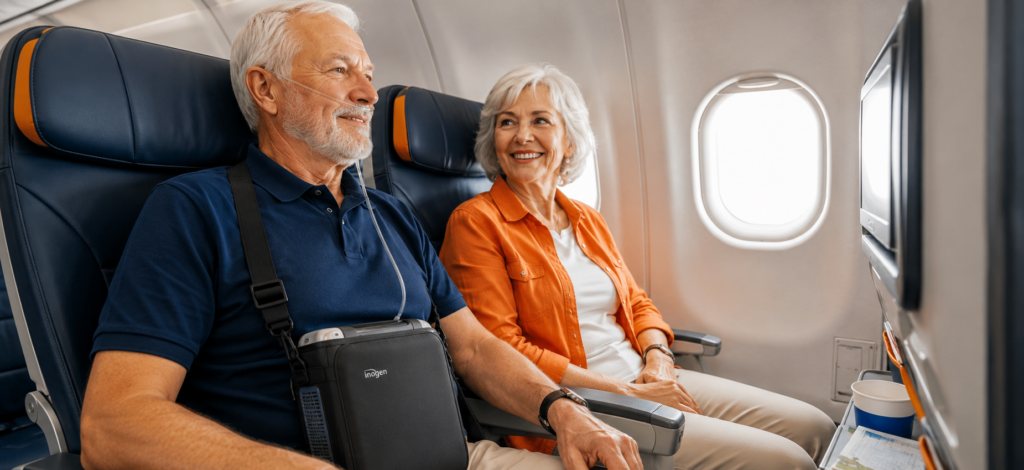
If your doctor recommends supplemental oxygen during your flight, you may be able to travel using an airline-approved Portable Oxygen Concentrator (POC). These lightweight, battery-powered devices extract oxygen from the surrounding air, allowing many people with COPD to fly safely without relying on traditional oxygen cylinders.
Most commercial airlines no longer supply medical oxygen onboard. Instead, passengers who require oxygen are usually asked to bring their own approved POC and notify the airline before travelling. Each airline has its own medical requirements, so it’s important to check their policies well in advance of your departure date.
A POC can provide reassurance for people whose oxygen levels may fall during flight, helping them remain comfortable throughout the journey. Many passengers only require oxygen while flying and do not use it in everyday life, which is why a fit-to-fly assessment is often recommended before booking your holiday.
Can I Hire a Portable Oxygen Concentrator?
Yes. Hiring a portable oxygen concentrator is often the most practical and cost-effective option if you only need oxygen for your holiday or a single journey. Purchasing a unit can be expensive, whereas hiring allows you to use a modern, airline-approved device without the long-term cost of ownership.
At SkyCare, we provide portable oxygen concentrator hire for holidays, business travel, cruises and medical repatriation. We can also advise on battery requirements, airline documentation and selecting the most suitable device for your travel plans.
Before You Travel with a POC
|
|
If you’re unsure whether you’ll need oxygen during your journey, speak with your healthcare professional before travelling. They can assess your oxygen levels and advise whether a portable oxygen concentrator is appropriate for your flight.
When Should You Avoid Flying with COPD?
Although many people with COPD can travel safely by air, there are times when flying should be delayed until your condition has improved. Travelling while your COPD is unstable could increase the risk of breathing difficulties during the flight and may result in your airline refusing to let you board if they have concerns about your fitness to travel.
Before booking your journey, speak to your GP or respiratory specialist if you’ve recently been unwell or your symptoms have changed. They can advise whether it’s safe to fly or whether further assessment is needed.
|
|
If you’ve recently developed bronchitis, pneumonia or another respiratory infection, it may be safer to postpone your trip until you’ve fully recovered. Our guide to flying with bronchitis or a chest infection explains when it’s safe to travel and when you should wait.
If your doctor advises against travelling on a scheduled airline, it doesn’t necessarily mean your journey has to be cancelled. Depending on your medical condition, a medical escort, sea level air ambulance flight or dedicated air ambulance may provide a safer alternative.
Frequently Asked Questions About Flying with COPD
Yes. Most airports and airlines offer free special assistance for passengers with reduced mobility or breathing difficulties. Assistance can include help from check-in to the departure gate, wheelchair transport if walking long distances is difficult, priority boarding and support when changing aircraft. Assistance should normally be requested at least 48 hours before your flight through your airline or travel agent. Even if you can walk independently, requesting assistance can help reduce fatigue before boarding.
It can. Many popular holiday destinations are located at higher elevations where oxygen levels are naturally lower than at sea level. If you have moderate or severe COPD, you may notice increased breathlessness both during the flight and after arriving at your destination. If you’re planning to visit a mountainous area or ski resort, speak to your healthcare professional before travelling, as additional oxygen or changes to your travel plans may be recommended.
Yes. Essential medications, including inhalers, are generally permitted in your hand luggage and should remain with you throughout your journey. It’s sensible to keep medicines in their original packaging and carry a copy of your prescription or a doctor’s letter, particularly when travelling internationally. Never pack essential COPD medication solely in your checked baggage in case your luggage is delayed.
Many travel insurance providers will cover COPD provided you declare it as a pre-existing medical condition when purchasing your policy. Failing to disclose your condition could invalidate your cover. Before travelling, check that your policy includes emergency medical treatment and, where appropriate, medical repatriation back to the UK, particularly if you’re travelling outside Europe.
If your breathing suddenly worsens or you develop symptoms such as chest pain, confusion, blue lips or severe breathlessness, seek medical attention immediately. Contact your travel insurer as soon as possible if hospital treatment is required. If you’re unable to return home on a scheduled commercial flight because of your medical condition, specialist medical transport, including a medical escort or air ambulance, may be necessary once your treating doctors consider you fit to travel.
Portable oxygen concentrator hire, medical escorts and specialist air ambulance support
Need Help Travelling with COPD?
SkyCare can arrange portable oxygen concentrator hire, medical escorts, sea level flights and air ambulance transport for people travelling with COPD.
Get a Quote