
 SkyCare
  Travel Advice
Flying While Pregnant – Travel Advice

Flying When Pregnant: Safe Travel Tips & UK Guidance
Flying while pregnant? Yes – it is generally safe to fly during a healthy pregnancy. Official UK health authorities, including the NHS and Civil Aviation Authority (CAA), agree that air travel is not harmful to you or your baby in an uncomplicated pregnancy. There is no evidence that flying will cause miscarriage, early labour, or waters breaking. However, you should always follow medical advice and make some preparations for a comfortable, safe trip. This guide provides clinically reassuring information on flying while pregnant, based on NHS, CAA, and other UK medical guidance.
Is Flying While Pregnant Safe? Advice for UK Travellers
Flying is usually safe in pregnancy if you have no complications. The NHS confirms that “flying isn’t harmful” during a normal pregnancy. The Royal College of Obstetricians and Gynaecologists (RCOG) likewise states that occasional air travel has no harmful effect on a straightforward pregnancy. Cabin pressure and altitude changes on commercial flights do not negatively impact maternal or foetal health in a typical pregnancy.
That said, it’s wise to discuss any health issues or pregnancy complications with your midwife or GP before flying. If you’re considering flying while pregnant, each trimester brings different considerations for comfort and safety. See below for trimester-specific guidance.
Flying While Pregnant in the First Trimester (0–12 Weeks)
Flying while pregnant in the first trimester is medically safe, though it can be uncomfortable due to nausea, vomiting and fatigue. The risk of miscarriage is higher during the first 12 weeks naturally, but flying does not increase that risk. If you feel well enough, you can fly. Bring snacks, stay hydrated, and consult your healthcare provider if you have concerns before air travel during early pregnancy.
Flying While Pregnant in the Second Trimester (13–27 Weeks)
This is considered the best time for flying while pregnant. The NHS notes that early symptoms ease and travel is more comfortable in the second trimester. Energy levels improve, nausea tends to subside, and you’re not yet restricted by the final months of pregnancy. Still, stay hydrated and move during the flight.
Flying While Pregnant in the Third Trimester (28–40 Weeks)
After 28 weeks, most airlines require a fit-to-fly letter. If you’re flying while pregnant after 36 weeks in a single pregnancy or 32 weeks with multiples, most UK airlines will not allow travel. Always check with your doctor and airline before booking.
UK Airline Rules for Flying While Pregnant After 28 Weeks
- Fit-to-Fly Letter: From 28 weeks, most airlines require a letter from your doctor or midwife confirming your due date and that the pregnancy is uncomplicated.
- Cut-off for Travel: Most UK airlines will not allow flying while pregnant beyond 36 weeks for a single baby or 32 weeks with twins or more.
- Varied Airline Policies: Always check the specific guidelines on your airline’s website before flying while pregnant.
Health Risks of Flying While Pregnant and How to Stay Safe
Pregnancy and long flights both increase the risk of DVT. To stay safe while flying while pregnant:
- Wear compression stockings
- Stay well hydrated
- Take short walks in the cabin regularly
- Do in-seat leg and foot exercises
Miscarriage Fears
The NHS confirms that flying does not cause miscarriage. The higher rate in early pregnancy is due to natural causes, not flying. If in doubt, ask your GP before flying while pregnant.
Cabin Environment
Aircraft cabin pressure, oxygen levels and air quality are not dangerous during normal pregnancy. Expect minor swelling, nasal stuffiness, or ear pressure. These are common and not serious.
When You Should Not Fly While Pregnant
Avoid flying if your healthcare provider advises against it. Do not fly during pregnancy if you have:
- Risk of preterm labour
- Severe anaemia
- Placental problems or recent bleeding
- Heart or lung disease
- Recent sickle cell crisis
Is Airport Security Safe During Pregnancy?
Yes. Going through security scanners is safe during pregnancy. UK airports use non-ionising millimetre wave technology. BIR confirmation
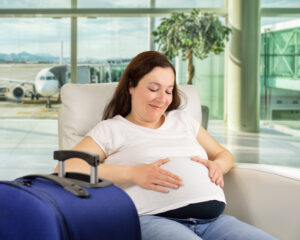
A pregnant traveller preparing for a flight after checking airline guidance, fit-to-fly requirements and pregnancy travel advice.
Do You Need to Tell Airlines You’re Flying While Pregnant?
Yes – if you’re flying while pregnant in the UK and past 28 weeks, you’ll need a fit-to-fly letter. Informing the airline early helps avoid issues at check-in and allows for support requests.
Travel Insurance and Medical Cover When Flying While Pregnant
- Buy travel insurance that covers pregnancy complications and possible early birth
- Ask your travel insurer what cover they provide if you do go into premature labour – will they cover hospital care and repatriation flights back to the UK?
- Many travel insurance policies stop cover from 32 weeks even though airlines may allow flight up to 36 weeks – always make sure you know what your insurer will cover
- Bring your maternity notes and personal medication
- Apply for a GHIC card for travel in Europe
- Check health advisories at your destination – including Zika or malaria
What If You Need Medical Repatriation During Pregnancy?
At SkyCare Repatriation, we regularly receive enquiries from families asking whether we can bring a pregnant relative home from abroad following illness, injury or pregnancy-related complications.
The answer depends entirely on the stage of pregnancy, the mother’s condition and the advice of the treating medical team.
Unlike a standard medical repatriation, transporting someone who may go into labour during an international journey presents significant clinical challenges. A safe obstetric transfer could require a consultant obstetrician, an experienced midwife and a specialist neonatal team capable of caring for a premature baby should delivery occur unexpectedly.
Even with these specialists present, an aircraft cabin or road ambulance can never provide the facilities of a fully equipped maternity hospital. If complications arise during labour, immediate access to an operating theatre, emergency Caesarean section and neonatal intensive care simply isn’t available.
For these reasons, our clinical team will always place the safety of both mother and baby first. In many situations, remaining under the care of a local maternity unit until it is medically appropriate to travel is the safest option.
If Your Baby Has Been Born Abroad
If your baby has already been delivered and requires specialist transport back to the UK, our experienced neonatal retrieval team can help.
SkyCare provides specialist neonatal medical repatriation for premature and critically ill newborn babies, working closely with neonatal intensive care units (NICUs), paediatric specialists and receiving hospitals across the UK and internationally.
Every neonatal transfer is individually planned using specialist equipment appropriate for newborn patients, ensuring the highest standards of care throughout the journey.
If you’re unsure whether travel is safe during pregnancy or need advice after an unexpected birth abroad, our team is always happy to discuss your individual circumstances and point you in the right direction.
Conclusion: Flying While Pregnant
Flying during pregnancy is safe for most women with an uncomplicated pregnancy. By checking your airline’s requirements, speaking with your midwife or obstetrician, arranging appropriate travel insurance and understanding when not to travel, you can reduce the risk of unexpected problems while abroad.
Should the unexpected happen, SkyCare is here to help where we can. While we do not routinely undertake obstetric repatriations where there is a significant risk of delivery during transport, we are specialists in neonatal and paediatric medical repatriation, helping newborn babies and their families return home safely once they have been medically assessed as fit to travel.
Reviewed by Dr Lee Collier – SkyCare Repatriation | Published on 09/06/2025 | Reviewed & updated on 29/06/2026 | Next review due 29/06/2028
